The Neil House is cloaked in many identities. It was once a Swiss chalet, a governor's mansion, a fraternity house and apartment complex. It has also been described as a station on the Underground Railroad. This research investigates the architecture of the Neil House to understand what spaces have been attributed to Freedom Seeking, and what role the house played in the Underground Railroad.
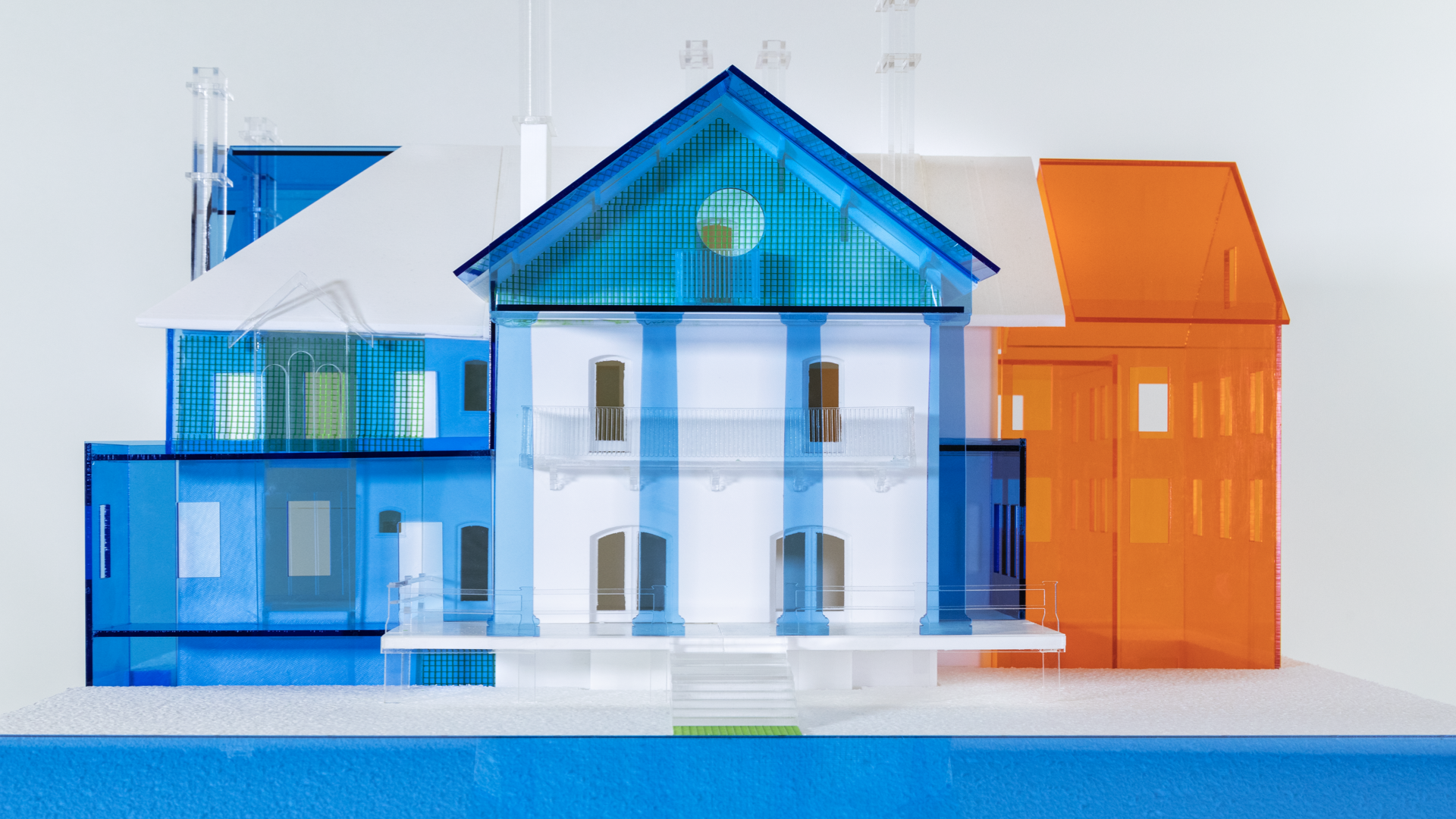
Photo by Phil Arnold.
Was This a Station? Investigating the Architecture of the Underground Railroad
Thompson Library, Ohio State · 2025–2026
Was This a Station?
Thompson Library, Ohio State · December 2025
Was This a Station?
Bexley Public Library · September 2025
BETHA Grant, The Ohio State University
Engagement Excellence Award, The Ohio State University
In 1827, Columbus entrepreneur William Neil acquired 300 acres north of Columbus. The Neil family and staff—including Ambrose Juris, a Black man who crossed to Ohio with Neil from Kentucky in 1818—formed the core of the household and farm. Over the next four decades, Neil developed a farm and constructed multiple residences for his family.
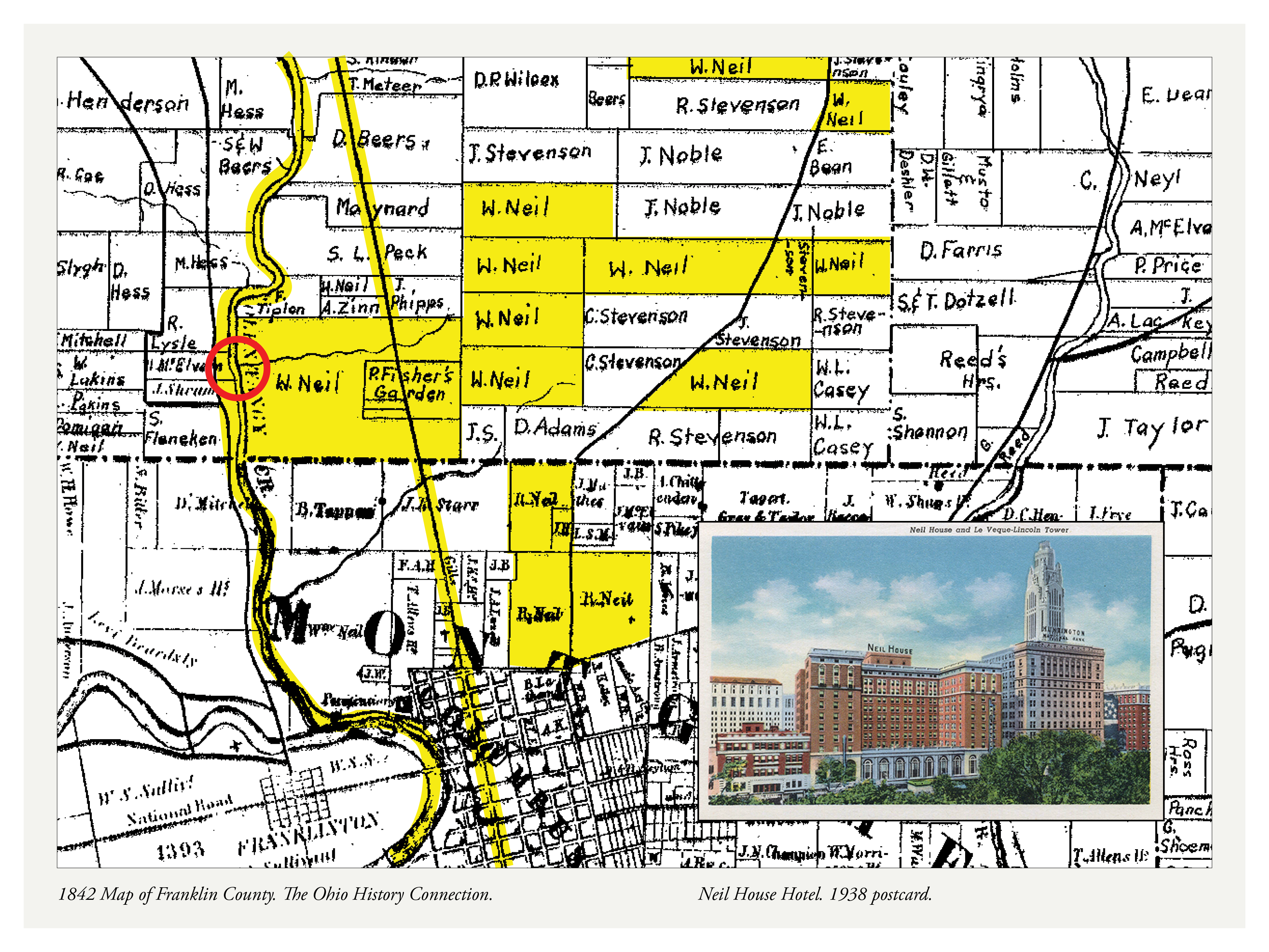
1842 Map of Franklin County, The Ohio History Connection.
In 1856, William built a Swiss-style chalet for his son, Robert Neil. The house, later called “The House on the Hill,” was later passed to Robert’s brother, Captain Henry Neil. Henry enlisted early in the Union Army and, after being wounded at the 1862 Battle of Iuka in Mississippi, returned home. On returning, he renamed the house “Indianola” after the town where he fought. In 1898, the Neil family added a northern wing, joining two foundation eras in the basement. The junction of these foundations was later dubbed the “secret room in the basement,” marking the start of the Neil House as an underground railroad station.
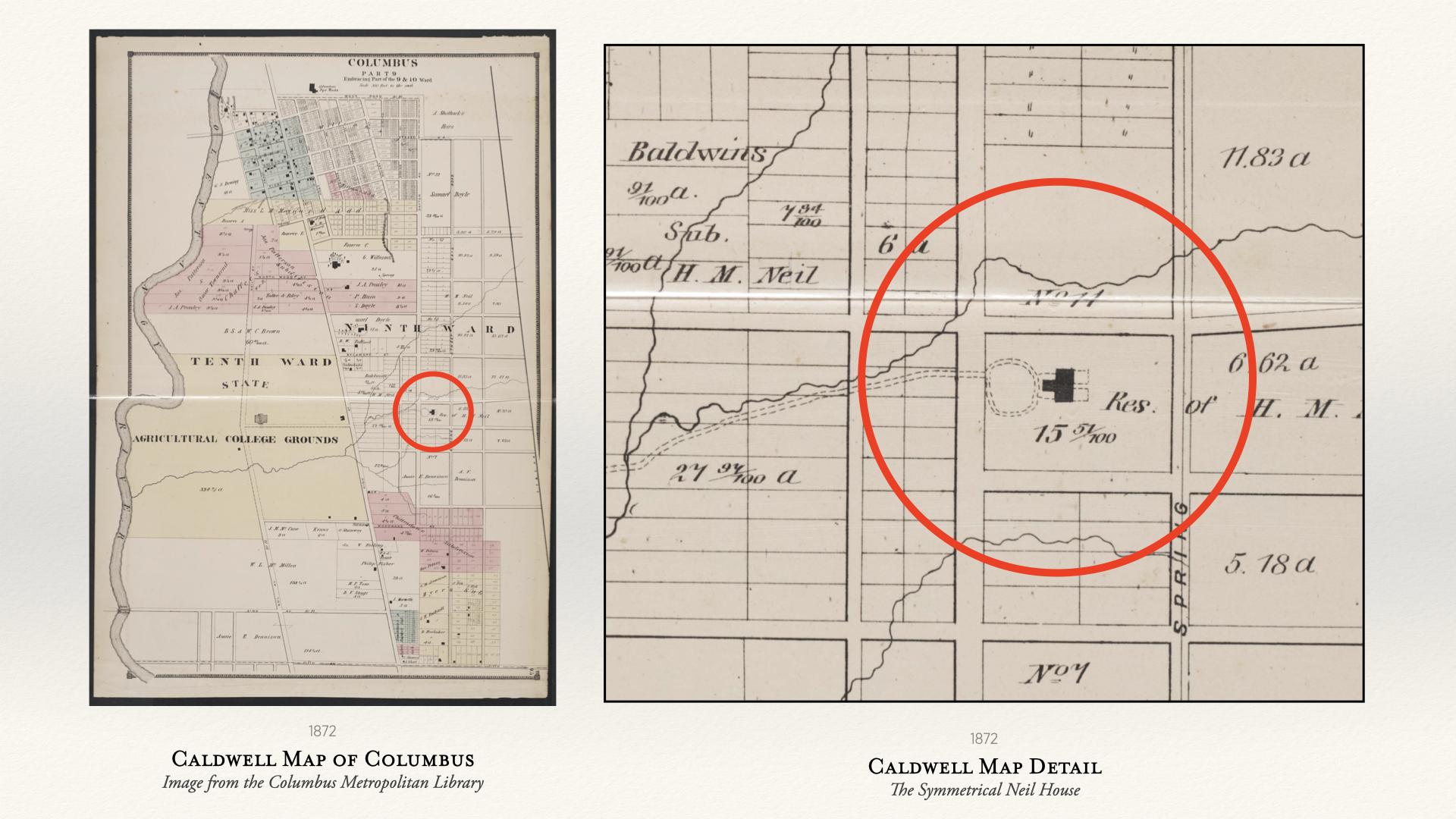
The 1872 Caldwell Map of Columbus shows Indianola with a symmetrical footprint. Map courtesy of the Columbus Metropolitan Library.
The story continues in 1919, when the Kappa Sigma fraternity purchased Indianola for $18,000. Twenty years later, architect Ray Sims transformed it entirely—wrapping the Swiss chalet in a Greek Revival facade with columns, a pediment, an oculus, and dramatic cornices, reflecting the architecture of the University of Virginia, where Kappa Sigma began. Sims regraded the lawn, removed the hill, and created a sweeping Jeffersonian approach. The Swiss house vanished beneath a new identity.
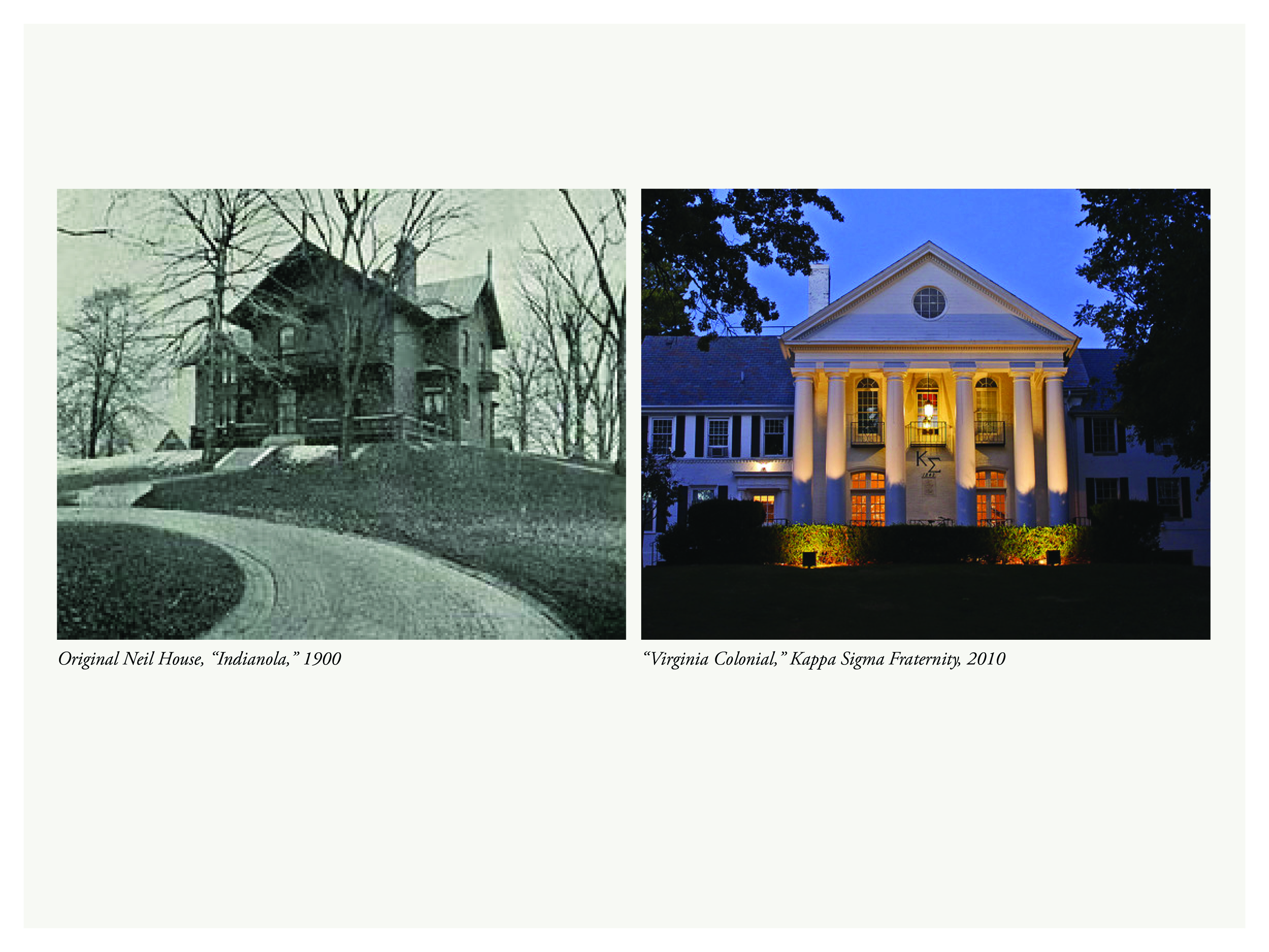
Swiss style “Indianola,” 1900 · Virginia Neoclassical “Kappa Sigma Fraternity,” 2010.
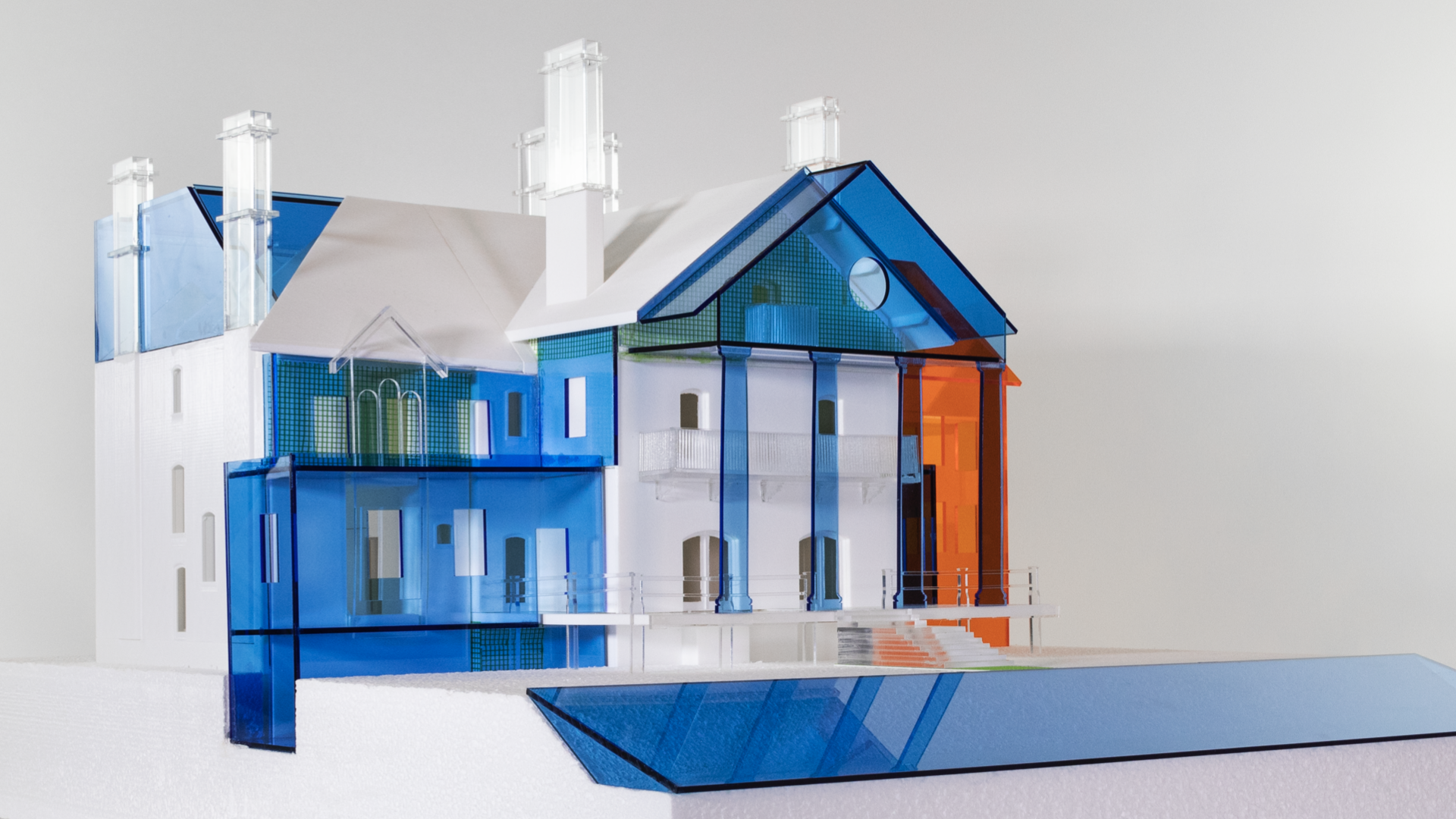
Architecture model constructed to show how the house facades layer over time. White: Original Swiss House · clear plexi: removed Swiss details · blue plexi: 1938 Virginia Neoclassical facade · orange plexi: mid 20th-century additions. Photo by Phil Arnold.
Ambrose Juris, a Black man, crossed into Ohio with William Neil from Kentucky in 1818. He lived and worked in the Neil household, and is buried with the Neil family at Greenlawn Cemetery. His wife, Catherine, lived alongside him—we do not know her history, and what the archive holds of her remains unclear.
That Ambrose is buried with the Neil family at Greenlawn Cemetery is sometimes read as an act of inclusion—that he was a member of the family. It may also be read as one final act of ownership—the family deciding, even in death, where he belongs.
Their presence in the Neil household complicates any simple reading of this house and its history. The Neil House is not an Underground Railroad station. But it is a house where an enslaved man became, by some measure, free—and where the terms of that freedom remain difficult to read. That story is distinct from the mythology, and more demanding of it.
It is likely that Ray Sims's blueprints revealed the strange “hidden room” in the center of the basement. Prior to this careful spatial analysis, no one would have noticed a gap between foundations. This seemingly peculiar space is given an explanation the following year, when a 1939 Kappa Sigma brochure states the following: “The home, for many years known as Neil Mansion… was a station on the famous underground railway during the Civil War.” So far, this is the first piece of archival evidence claiming the Neil House was part of the Underground Railroad.
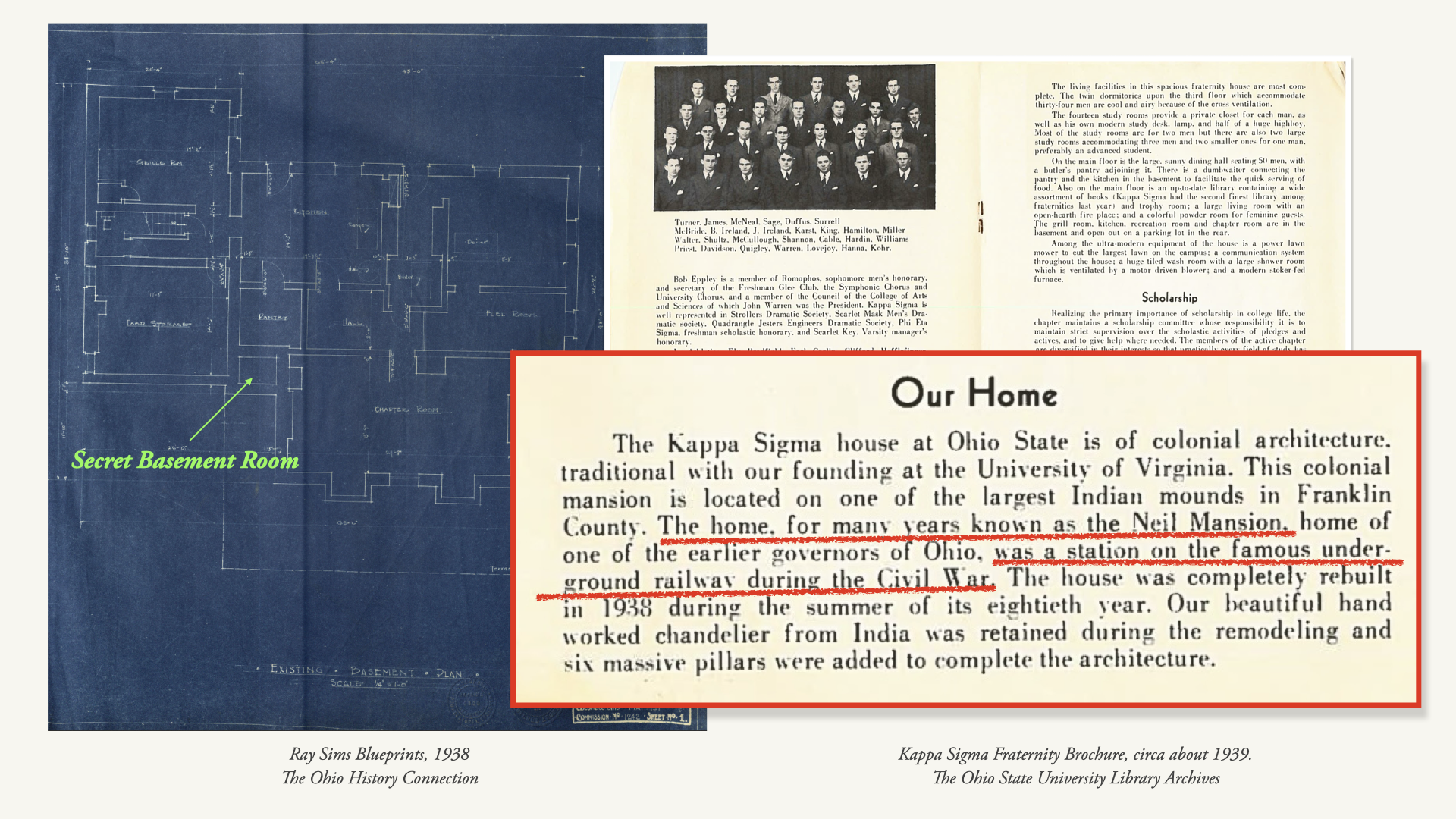
1938 blueprints (Ohio History Connection); 1939 Kappa Sigma brochure prints the house was a station on the Underground Railroad (OSU Archives).
Sims's blueprints reveal how the 1898 North-facing addition was connected to the original house. Map analysis shows the house was symmetrical. When the northern wing was added, the two eras of foundation were resolved in a peculiar, albeit structurally sound, solution. The “secret room” is simply the result of the 1898 renovation and would have been formed well after the Civil War.
Animating Eras: The 1938 blueprints suggest how the foundation gap between renovations was closed. White: 1856 Symmetrical Swiss House · Green: 1898 Swiss Northern Wing.
These spaces are real—but they have been misread. This research explores how evolving interpretations, stories, and beliefs have shaped both the self-image and the architecture and landscape of The Ohio State University.
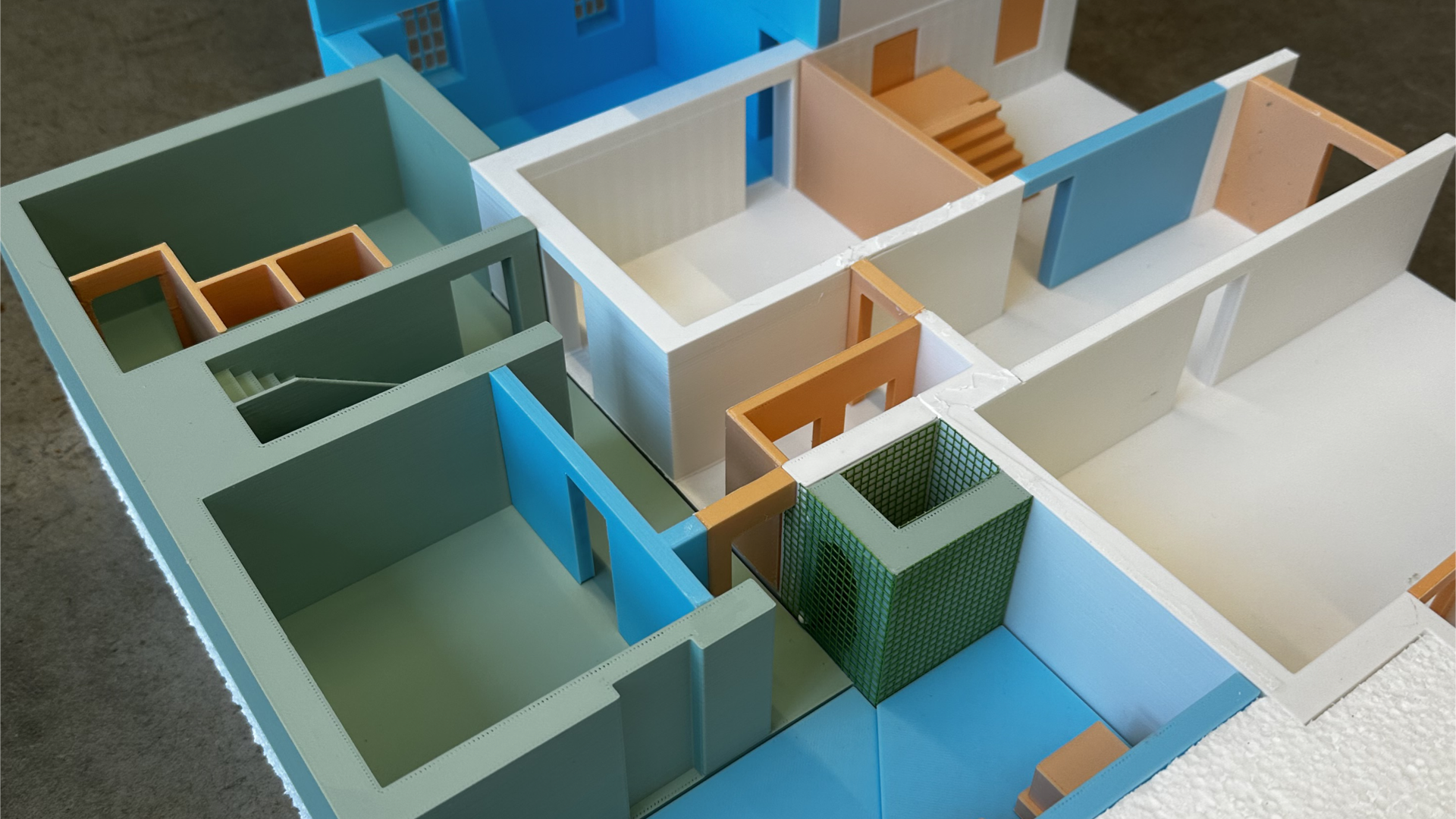
Cut away model revealing four eras of construction—and the spaces between them. Photo by Karen Lewis.
William Neil's original symmetrical Swiss-style brick chalet for his son Robert—sited on a small ridge above Neil Run, with a curved drive approaching the front entry.
A new northern wing in the Swiss style, adding a new entryway, staircase, and showcase windows. The new basement foundation created a structural junction with the 1856 construction—the origin of the "secret room."
Architect Ray Sims wrapped the Swiss house in a Greek Revival facade—pediment, oculus, columns, cornices—to reflect Kappa Sigma's roots at the University of Virginia. The front lawn was regraded. The gaps and crawl spaces throughout the house result from the mismatch between two architectural identities layered over each other.
A dormitory wing added to the south, interior spaces reconfigured—the final layer of a building that has been continuously remade over more than a century.
The 1939 Kappa Sigma brochure did not invent the Underground Railroad — it invented the Neil House's place within it. What followed was repetition rather than research. Newspapers cited the brochure. Institutions cited the newspapers. Signage cited the institutions. By 2025, when the Columbus Metropolitan Library posted the claim on Instagram, it had accumulated the weight of consensus without the support of evidence.
Each retelling made the next one easier. The archive became harder to reach than the legend, and the building itself became secondary — a space onto which a story, already fully formed, was projected.
Since 1939, sources have continuously recycled the statement that the Neil House was a station on the Underground Railroad. Even as recently as February 2025, when the Columbus Metropolitan Library posted an Instagram reiterating the fact, the stories have been passed down over and over again.
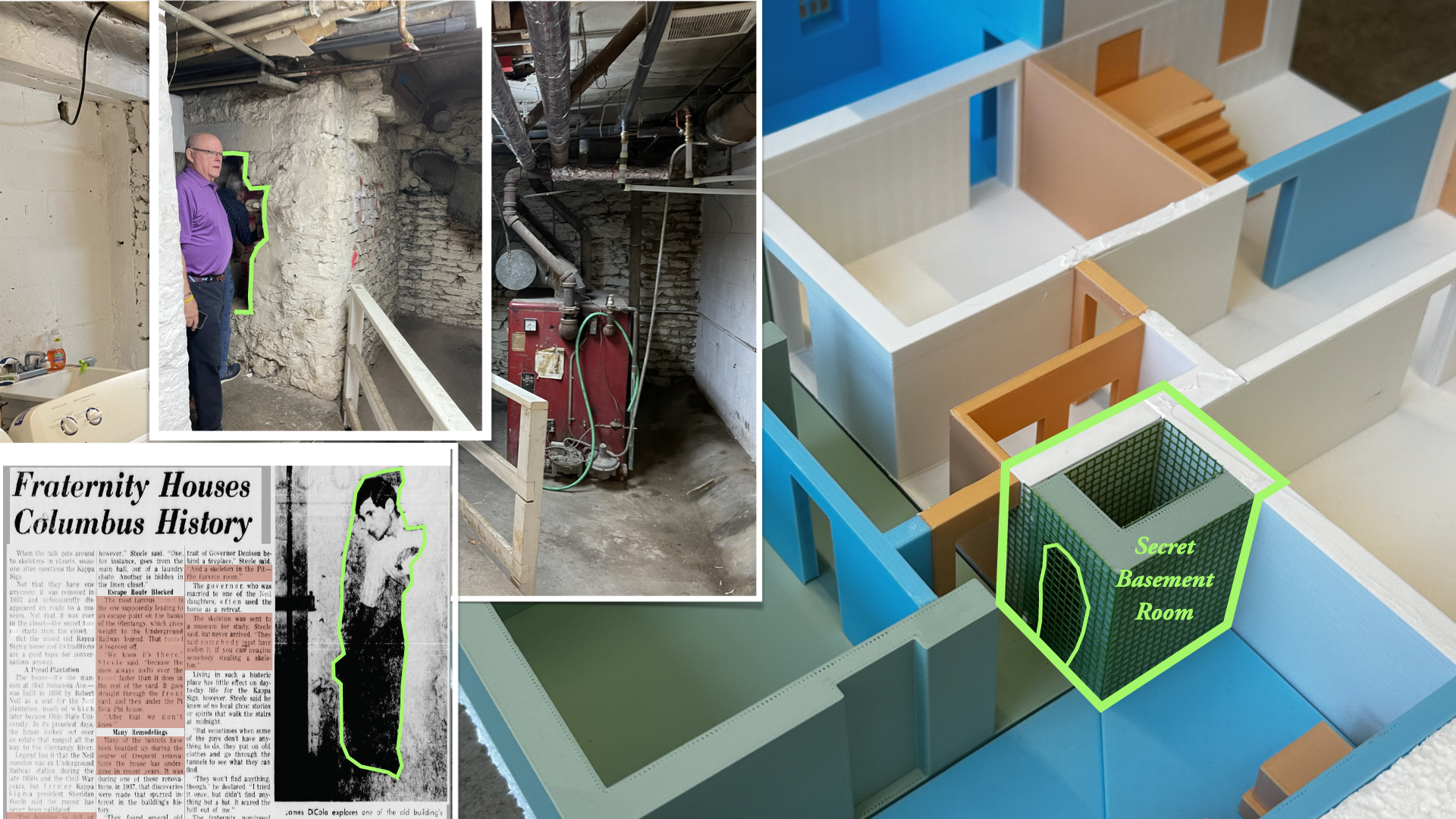
Over the years the basement room has been explored by the house residents who search for further evidence of the Underground Railroad. Photos and Models by Karen Lewis. Newspaper article, The Columbus Dispatch, 1967.
“I put a picture up on a wall. Then I forget there is a wall.” —Georges Perec, Species of Spaces
Once the Underground Railroad idea was in place, every incongruous building detail confirmed it. The construction joint became a hiding place, the crawl space became a passage, the attic became a refuge. The picture that was formed preceded the looking, and that image shaped everything else that followed. And because it has never been questioned, further decisions have been made that reinforce the assumptions, that double down on the values and beliefs, and in turn further inscribe those beliefs back into the built environment. We can tell a different story just by looking at the architecture. Not at the picture. But at the walls.
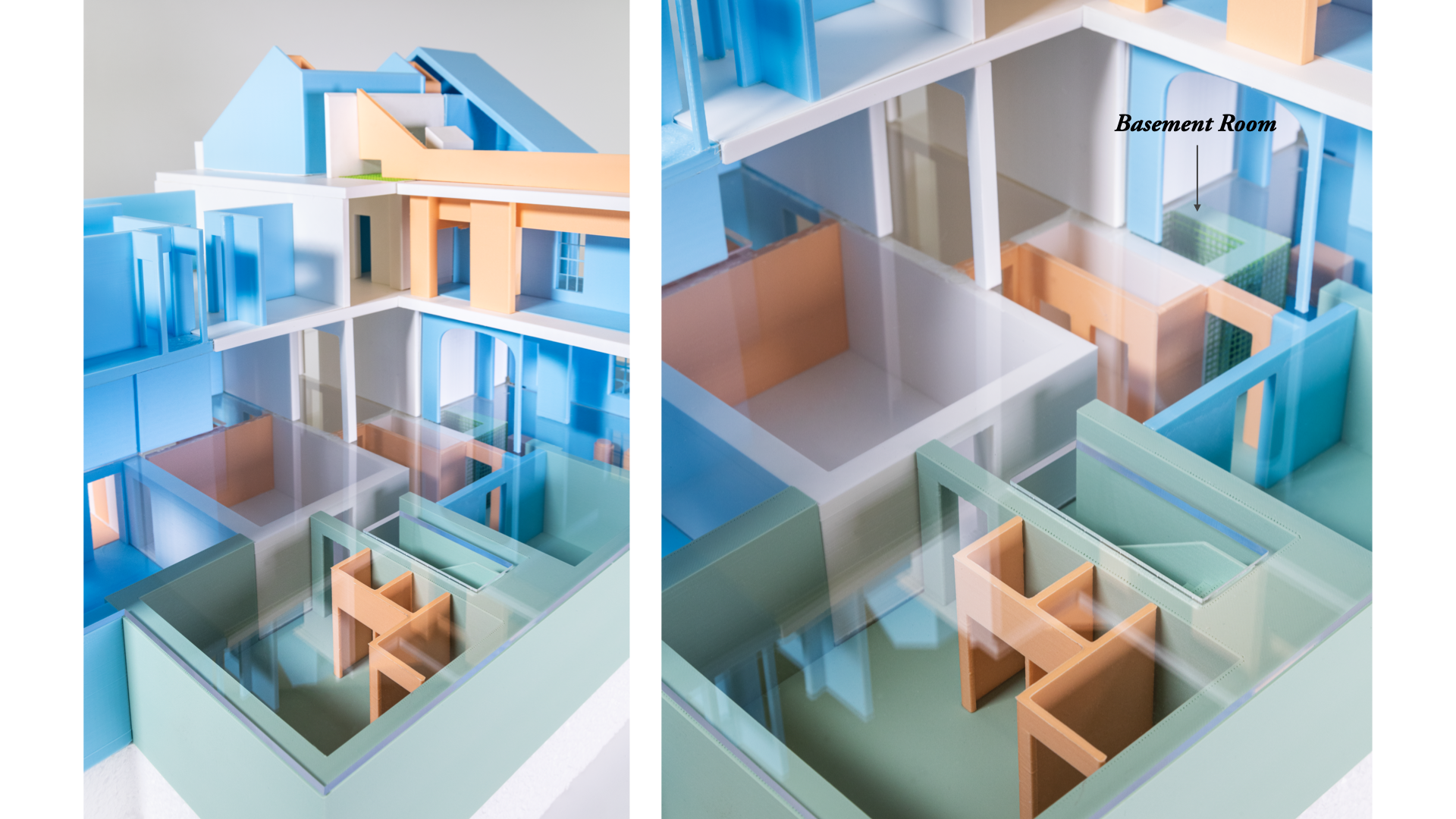
Cutaway section model. The first floor is represented in clear plexiglass so viewers can look into the basement and see how the secret room relates to other spaces in the house. Photo by Phil Arnold.
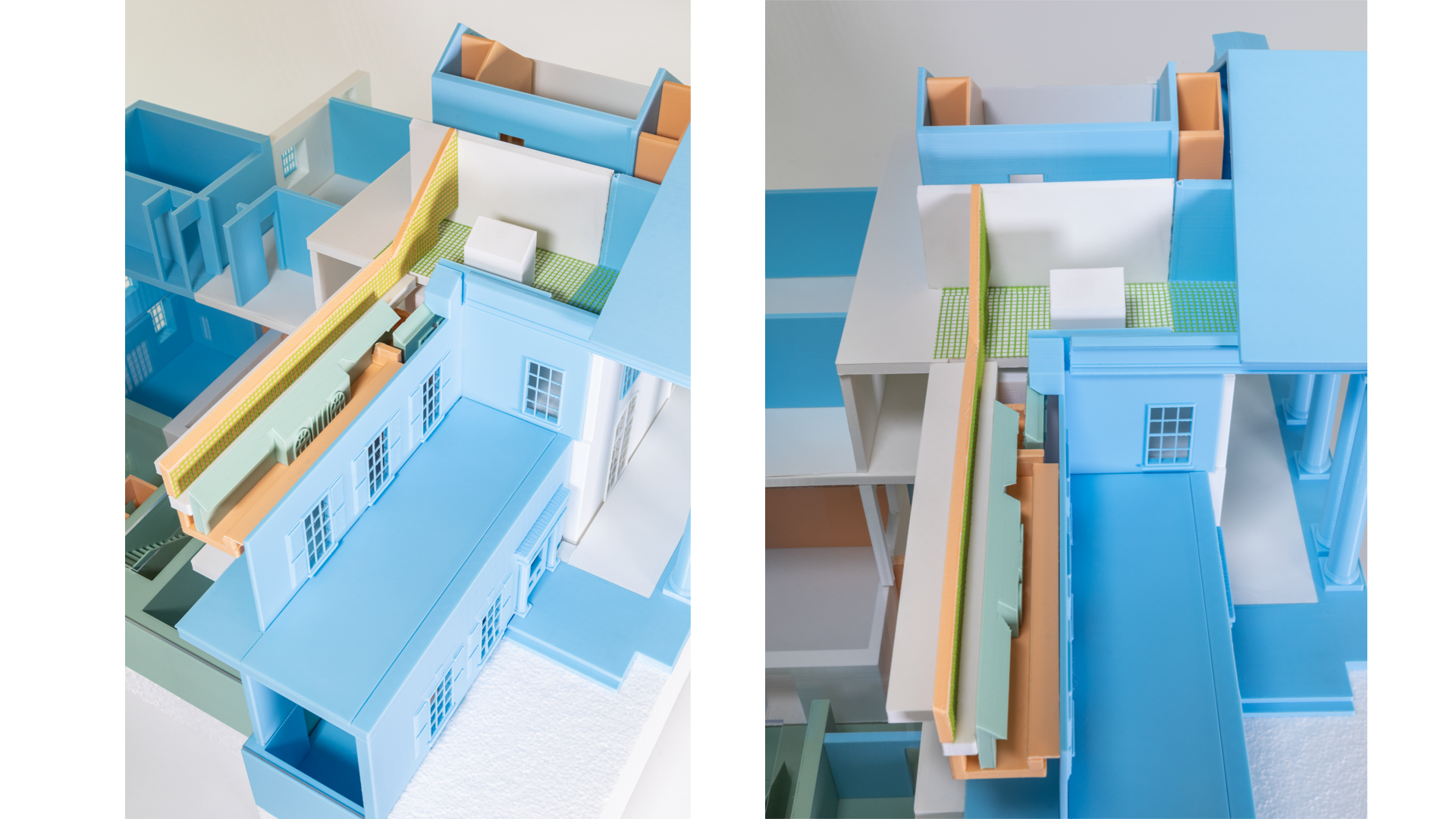
Details of the roof space, where the gap between the roof and resident's rooms has been misidentified as the Underground Railroad. Photos by Phil Arnold.
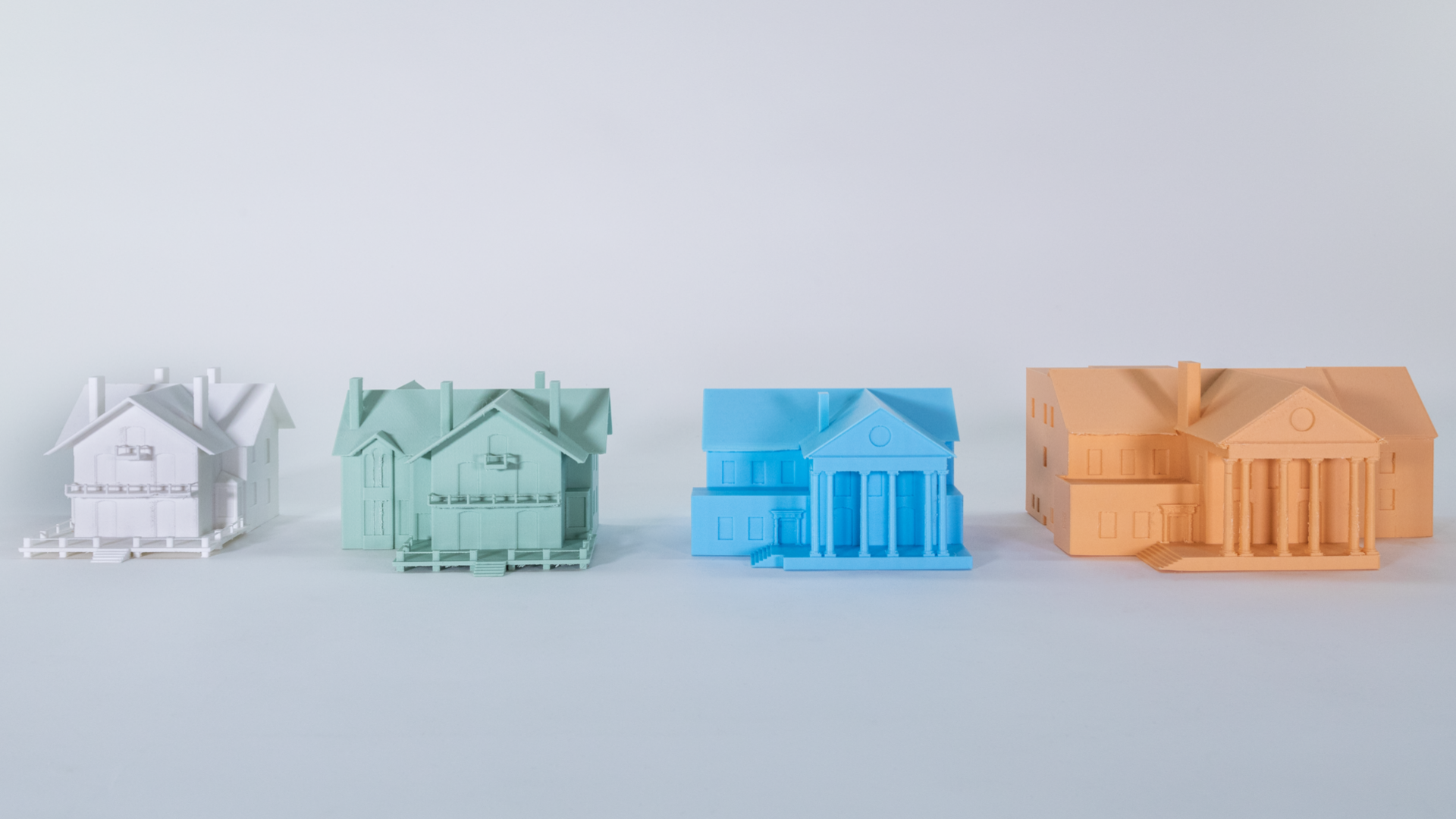
The four phases of the Neil House as individual models. Left to right: White: 1856 Symmetrical Swiss House · Green: 1898 Swiss Northern Wing · Blue: 1938 Virginia Neoclassical · Orange: 1970s Midcentury Updates. Photo by Phil Arnold.
[Names]
[Names]
[Names]
[Names]